
Drone technology has transformed photography in recent years, allowing photographers to capture breathtaking aerial perspectives that were once impossible without aircraft.
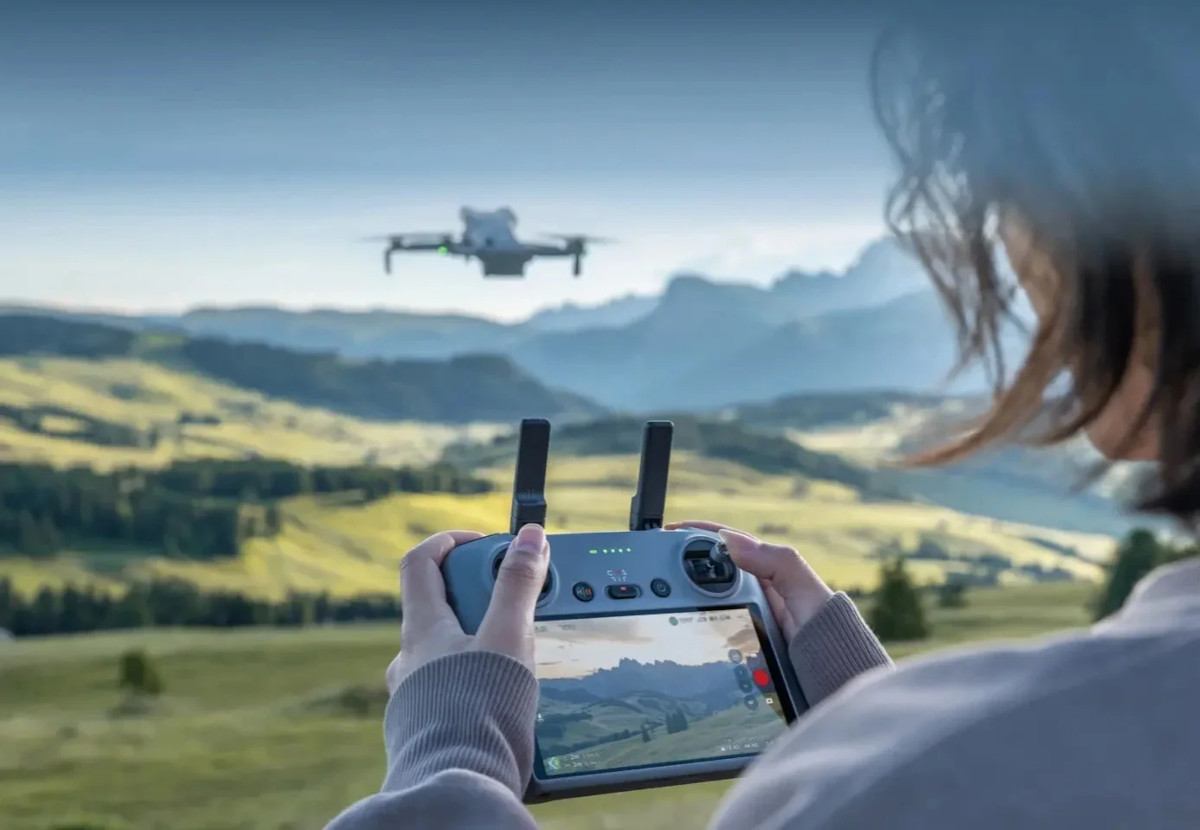
Drones have become one of the most exciting technological innovations of the past decade. Once reserved primarily for military or industrial use, drones are now widely accessible to hobbyists, photographers, filmmakers, and businesses looking to enhance their visual content.
Paired with aerial photography, drones allow creators to capture breathtaking perspectives that were once only possible using helicopters or specialized aircraft. Whether you’re exploring drone flying as a hobby or looking to create professional-quality visual content, understanding the basics of drones and aerial photography can open up a whole new world of creative possibilities.
In this beginner’s guide, we’ll explore how drones work, how to choose the right one, and the essential techniques that can help you capture stunning aerial photos and videos.
Check out this channel for more:
Drones, also known as Unmanned Aerial Vehicles (UAVs), are aircraft that can be controlled remotely or fly autonomously using onboard sensors, flight software, and GPS technology.
Most consumer drones today are quadcopters, meaning they use four rotors to create lift and maintain stable flight. Advanced stabilization systems allow drones to remain steady even in moderate wind conditions.
Many modern drones include built-in cameras capable of capturing high-resolution photos and videos. Some models also support intelligent flight modes, obstacle detection, and automated tracking features.
Popular consumer models such as the DJI Mini 4 Pro and DJI Air 3 combine compact designs with powerful camera systems that make aerial photography easier for beginners.
______________________________________________________________________________________________________________________________________________
Aerial photography offers perspectives that traditional ground photography simply cannot achieve.
With a drone, photographers can capture sweeping landscapes, dramatic cityscapes, and unique overhead compositions that were once extremely difficult or expensive to produce.
Some of the biggest advantages include:
Drones allow photographers to capture bird’s-eye views, overhead compositions, and dynamic angles that transform ordinary scenes into visually compelling images.
Modern drones can produce smooth cinematic footage through stabilized gimbals and automated flight paths. Movements like tracking shots, aerial pans, and rising reveals create film-like visuals.
Unlike traditional cameras, drones can fly at different heights, angles, and directions, offering nearly unlimited creative possibilities.
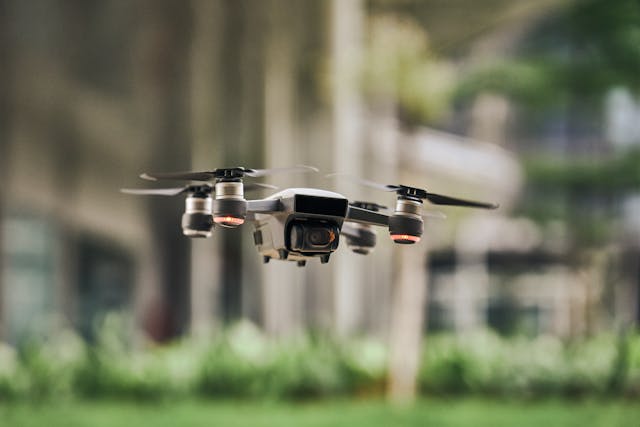
Not all drones are designed for the same purpose. Understanding the main categories can help beginners choose the right model.
Entry-level drones are designed for beginners learning to fly. They are lightweight, easy to control, and relatively affordable. While camera quality may be basic, they provide a great introduction to drone flying.
Mid-range drones offer improved cameras, longer flight times, and features such as GPS stabilization and obstacle avoidance.
These drones typically support 4K video recording, making them ideal for hobby photographers and content creators.
Professional drones provide the highest level of image quality, control, and flight stability. They often include larger sensors, advanced gimbal systems, and extended flight range.
Some professional systems even support 8K video capture and live streaming.
Selecting the right drone involves considering several important factors.
Camera performance is one of the most important aspects of aerial photography. Look for drones capable of at least 4K video and high-resolution still images.
A 3-axis gimbal is also essential for stabilizing footage during flight.
Battery life determines how long you can capture footage during each flight.
Entry-level drones: 15–20 minutes
Mid-range drones: 25–35 minutes
Professional drones: 40+ minutes
Many photographers carry multiple batteries for extended shooting sessions.
Drones with GPS stabilization provide smoother control and more accurate positioning.
Obstacle sensors can also help prevent collisions, especially for beginners.
Drone range determines how far your aircraft can fly while maintaining a stable connection to the controller.
Some professional drones can transmit video signals from several miles away.
Check out his channel UAV Coach
This video explains:
camera settings (ISO, shutter speed, aperture)
how to use drone gimbals for stable shots
shooting in RAW vs JPEG
basic aerial photography composition
Learning camera settings and stabilization is essential for capturing high-quality aerial images and smooth cinematic footage with drones.
Learning a few simple techniques can significantly improve your aerial photography results.
RAW files contain more image data than JPEG files, allowing greater flexibility during editing.
Smooth and controlled movements produce better photos and more cinematic video footage.
From the air, landscapes reveal patterns and shapes that are invisible from the ground. Roads, rivers, fields, and architecture can create visually striking compositions.
Before flying, study your location and identify interesting viewpoints, landmarks, or natural lines that can guide the viewer’s eye.
A crooked horizon can ruin an otherwise great photo. Most drones include gimbal stabilization, but it’s still important to check your framing.
For beginners entering the world of drone photography, several models stand out for their balance of performance, portability, and camera quality.
Many new pilots start with compact drones like the DJI Mini 4 Pro because it offers excellent stabilization and intelligent flight features while remaining lightweight and travel-friendly.
Photographers looking for additional performance often consider the DJI Air 3, which includes dual cameras, extended flight time, and advanced obstacle sensing.
Another popular option is the Autel EVO Lite+, known for its large camera sensor and strong low-light performance.
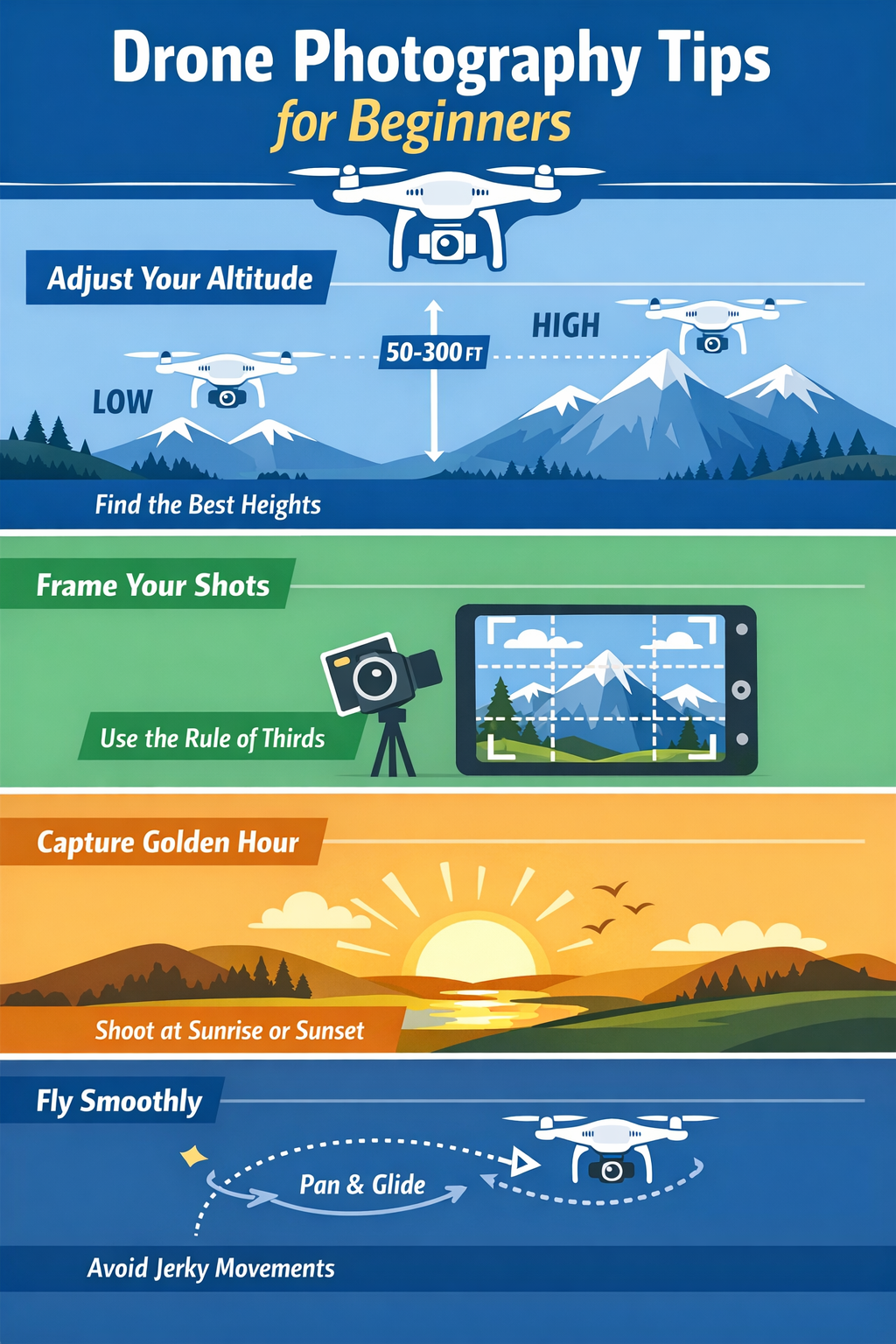
Drone Beginners infographics
The best lighting for aerial photography often occurs shortly after sunrise or before sunset. The warm tones and long shadows during golden hour create dramatic visuals.
Use principles like:
Rule of thirds
Leading lines
Symmetry
Framing
These techniques help create more balanced and visually appealing images.
Different heights create different moods:
Low altitude reveals detail
Higher altitude captures expansive landscapes
Slow rising shots, orbiting subjects, and smooth tracking movements can create stunning video footage.
Before flying a drone, it’s important to understand local regulations.
In the United States, drone operators must follow guidelines from the Federal Aviation Administration.
Key safety rules include:
Register drones that meet weight requirements
Avoid flying near airports
Maintain line-of-sight with your drone
Respect privacy and restricted areas
Following these guidelines ensures safe and responsible drone operation.
Drone technology continues to evolve rapidly. Future innovations may include:
AI-powered flight automation
improved obstacle avoidance systems
longer battery life
higher-resolution imaging sensors
As these technologies develop, drones will likely become even more powerful tools for photographers, filmmakers, researchers, and creative professionals.
In the United States, recreational drone pilots must follow aviation guidelines and register their drone depending on its weight and intended use.
In my experience, it is best to do a little research to understand how the laws are changing across the country and around the world. With the
advancement of drones use for military and undercover use, this will become more and more sensitive and controlled.
Many photographers capture images between 50 and 300 feet, depending on the subject and desired composition.
Most modern drones include GPS stabilization, intelligent flight modes, and obstacle sensors, making them much easier for beginners to operate.
The golden hour after sunrise or before sunset typically produces the most dramatic lighting for aerial photography.
____________________________________________________________________________________________________________________________________________
Getting beautiful aerial photos takes more than just flying a drone into the air. With a few basic techniques, beginners can dramatically improve the quality of their drone images and videos.
Many drones allow you to capture images in RAW format, which stores far more image data than standard JPEG files. RAW photos allow you to adjust exposure, colors, and highlights more effectively during editing.
Fast or jerky drone movements can create unstable footage and poorly composed images. Smooth, gradual flight movements produce more cinematic results and help maintain stable framing.
From the air, landscapes often reveal patterns that are invisible from the ground. Roads, rivers, fields, and buildings create strong visual shapes that can make your aerial photography more interesting.
Professional drone photographers often plan their shots ahead of time. Study the location, look for interesting angles, and think about how light will interact with the landscape.
A tilted horizon is one of the most common mistakes beginners make. Most drones include built-in gimbal stabilization, but it’s still important to monitor your framing while shooting.
Many beginner photographers use compact drones like the DJI Mini 4 Pro or mid-range models such as the DJI Air 3 because they provide excellent camera stabilization and intelligent flight modes that make capturing smooth footage easier.
_______________________________________________________________________________________________________________
__
